How to Win at Mahjong Solitaire More Often
Want to win more Mahjong Solitaire games? You're in the right place! While Mahjong Solitaire seems simple—just match tiles—winning consistently requires strategic thinking, pattern recognition, and avoiding common mistakes. This comprehensive guide reveals proven strategies used by expert players to boost win rates from 50% to 80%+. Whether you're a beginner struggling to complete boards or an intermediate player looking to refine your technique, these practical tips will transform your gameplay. Let's master the art of winning at Mahjong Solitaire!
🏆 Quick Win Tips (Apply These Today!)
- ✓Always clear top layer tiles first – they block the most tiles underneath
- ✓Prioritize edge tiles – they're safer to match and prevent traps
- ✓Think 2-3 moves ahead – consider what tiles will be revealed
- ✓Match tiles that unlock the most other tiles – maximize your options
- ✓Avoid matching all 4 copies too quickly – keep options open
Beginner Strategies: Building Your Foundation
If you're new to Mahjong Solitaire or win less than 50% of games, start with these fundamental strategies. Master these basics before moving to advanced techniques.
🎯 Strategy #1: Top Layer Priority
The Rule: Always scan and match top layer tiles before deeper tiles.
Why It Works: Top tiles block all tiles underneath them. Removing them creates the most new matching opportunities. A single top tile can block 3-6 tiles beneath it.
How to Apply: Start every game by identifying all exposed top tiles. When you see a matching pair where one is on top and one is on a lower layer, always prioritize clearing the top tile.
🎯 Strategy #2: Edge Tiles First
The Rule: When choosing between matches, prefer tiles on the far left or right edges.
Why It Works: Edge tiles often have their matching pairs buried underneath. Clearing edge tiles early prevents creating "trapped pairs" where identical tiles end up blocked beneath each other.
How to Apply: Look for matches that include at least one edge tile. When both tiles in a match are edges, that's an especially safe match to make.
🎯 Strategy #3: The Four-Tile Rule
The Rule: Every tile appears exactly 4 times. Track where these copies are located.
Why It Works: If you can see 3+ copies of a tile, matches are safe. If you can only see 2 copies, the other 2 are buried—match carefully!
How to Apply: Before matching a pair, mentally count: "How many of this tile can I see?" If only 2 are visible, think extra carefully about whether matching them now might trap the hidden copies later.
🎯 Strategy #4: Scan Systematically
The Rule: Don't search the board randomly. Scan by tile category (Bamboo, Characters, Circles, Winds, Dragons).
Why It Works: Systematic scanning is 3-4x faster than random searching and prevents missing obvious matches. Your brain processes patterns better when grouping similar items.
How to Apply: First pass: scan only Bamboo tiles. Second pass: scan only Characters. Third pass: Circles. Fourth: Winds & Dragons. This methodical approach finds matches quickly and reliably.
Advanced Strategies: Level Up Your Game
Once you've mastered the basics and win 50-60% of games, these advanced techniques will push you to 70-80%+ win rates.
🏆 Advanced Strategy #1: Unlock Chain Planning
The Technique: Before making any match, visualize what tiles will be unlocked and whether you can match those next.
Expert Insight: Great players think 4-5 moves ahead, creating "unlock chains" where each match systematically reveals more matches. This prevents dead ends.
Practice Method: Pause before each move and ask: "If I clear these tiles, what gets revealed? Can I match those tiles? What about after that?" Map out 3-4 moves mentally before clicking.
🏆 Advanced Strategy #2: Bottleneck Recognition
The Technique: Identify "bottleneck" areas where many tiles funnel through a narrow section.
Expert Insight: Bottlenecks are the most dangerous areas in any layout. One wrong match in a bottleneck can trap 20-30 tiles. In layouts like Dragon or Scorpion, bottlenecks are obvious narrow bridges.
Practice Method: At the start of each game, identify bottleneck sections. Clear tiles around them carefully, and save bottleneck tiles themselves for last when you have the clearest picture of what's underneath.
🏆 Advanced Strategy #3: Symmetry Exploitation
The Technique: In symmetrical layouts (like Turtle), check mirror positions for matching tiles.
Expert Insight: While tile placement isn't always symmetrical, many layouts have symmetrical structures. When you find a tile on the left, quickly glance at the mirror position on the right—matches are often there.
Practice Method: Develop "peripheral vision" scanning. Don't focus intensely on one tile; use soft focus to let your peripheral vision catch patterns across both sides of the board simultaneously.
🏆 Advanced Strategy #4: The Sacrifice Move
The Technique: Sometimes matching a non-obvious pair now prevents a trap later.
Expert Insight: Not all matches that seem good are actually good. Sometimes you must "sacrifice" an obvious match now to avoid creating an impossible situation 10 moves later. This requires experience and pattern recognition.
Practice Method: When you see two identical tiles positioned where one might block the other's future match, consider clearing them immediately—even if other matches seem more appealing. Trust your instinct about dangerous tile positions.
Tile Matching Priority: The Winning Order
Not all matches are equal! Follow this priority system to maximize your win rate:
🎯 Match Priority Hierarchy (Highest to Lowest)
- 1Top Layer Tiles: Always clear these first—they unlock the most tiles beneath them.
- 2Blocking Tiles: Tiles that are blocking multiple other tiles (especially in bottlenecks).
- 3Edge Tiles: Far left and right tiles that might trap their matches underneath.
- 4Tiles with 3+ Visible Copies: When you can see 3-4 copies, matches are safer.
- 5Center Tiles: Only after top, blocking, and edge tiles are handled.
- 6Tiles with Only 2 Visible Copies: Lowest priority—match these last when you understand the board better.
💡 Pro Tip: This hierarchy is a guideline, not an absolute rule. Sometimes strategic thinking trumps priority order—experience teaches you when to break these rules.
Common Mistakes That Cost You Wins
Even experienced players make these errors. Recognize and avoid them to instantly improve your win rate:
❌ Mistake #1: Matching Too Quickly
The Problem: Clicking the first match you see without considering alternatives.
The Fix: Take 5-10 seconds before each move to scan for better matches. Speed comes with practice—prioritize smart moves over fast moves.
❌ Mistake #2: Ignoring Stacked Identical Tiles
The Problem: Matching a tile without noticing its identical match is buried directly underneath it.
The Fix: Before matching any tile, check if there's an identical tile directly below it. If yes, find a different match first. This single tip can boost your win rate by 15-20%!
❌ Mistake #3: Clearing All 4 Copies Too Fast
The Problem: Matching both pairs of a 4-tile group before understanding what's underneath.
The Fix: When you see 3-4 copies of a tile, resist matching all pairs immediately. Clear one pair, see what's revealed, then decide if clearing the second pair makes sense.
❌ Mistake #4: One-Move Thinking
The Problem: Only thinking about the current move without planning ahead.
The Fix: Always ask "What happens after this match?" Think at least 2-3 moves ahead. Advanced players visualize 5+ moves ahead.
❌ Mistake #5: Neglecting Bottom Layers
The Problem: Focusing only on top layers and forgetting about what's at the bottom.
The Fix: While top layers should be prioritized, occasionally glance at bottom layers to track where tiles are. This prevents surprises late in the game when you realize critical matches are trapped.
❌ Mistake #6: Over-Reliance on Hints
The Problem: Using hints constantly prevents developing pattern recognition skills.
The Fix: Challenge yourself to find at least 2-3 matches before using a hint. Hints are great when truly stuck, but overuse stunts your growth as a player.
How to Use Hints Effectively
Most Mahjong Solitaire games include a hint feature. Here's how to use it strategically without becoming dependent:
💡 Smart Hint Usage Guidelines
✅ GOOD Hint Usage:
- • When you've scanned the entire board twice and genuinely can't find a match
- • To verify if your planned move is optimal or if there's a better option
- • In the endgame (last 10-20 tiles) when mistakes are most costly
- • To learn tile patterns—study why the hint suggests that particular match
- • When practicing a new, unfamiliar layout for the first time
❌ BAD Hint Usage:
- • Clicking hint immediately without attempting to find matches yourself
- • Using hints every 2-3 moves throughout the entire game
- • Relying on hints instead of developing pattern recognition skills
- • Using hints because you're impatient rather than truly stuck
🎯 Pro Challenge: Try to complete 3 full games without using any hints. This forces your brain to develop pattern recognition naturally. You'll be amazed how much faster you spot matches after just a few hint-free games!
Endgame Techniques: Finishing Strong
The endgame (last 10-30 tiles) is where many players snatch defeat from the jaws of victory. Master these techniques to convert more winning positions into actual wins:
🎯 Endgame Technique #1: Slow Down
Why: With fewer tiles remaining, each move becomes more critical. One mistake in the endgame can make a winnable board unwinnable.
How: When you reach 20-30 tiles remaining, slow your pace by 50%. Take 15-20 seconds per move instead of 5-10. Think through every match carefully—there are few enough tiles to analyze all options.
🎯 Endgame Technique #2: Count Remaining Tile Types
Why: In the endgame, you can actually track which tiles remain. If only 6 tile types are left, you can mentally map all matches.
How: Scan and mentally note: "I see two Bamboo 5s, two Red Dragons, two Wind East..." If you can track all remaining tiles, you can solve the endgame like a logic puzzle.
🎯 Endgame Technique #3: Look for "Forced Sequences"
Why: Sometimes the endgame has only one correct move order—any deviation leads to failure.
How: Identify if any tiles have only one possible match remaining. These create "forced moves." Work backward: "If I must match those two last, what must I match before them?" This reveals the only winning sequence.
🎯 Endgame Technique #4: Use Undo Liberally
Why: The endgame is complex enough that even experts benefit from trying different move orders.
How: Don't be afraid to undo 5-10 moves in the endgame if you realize you've made a mistake. Try different sequences. The undo feature is a learning tool—use it to understand why certain sequences work and others don't.
Practice Games: Apply What You've Learned
Theory is great, but practice is essential! Try these Mahjong Solitaire games to apply the strategies you've learned:
Mahjong Solitaire
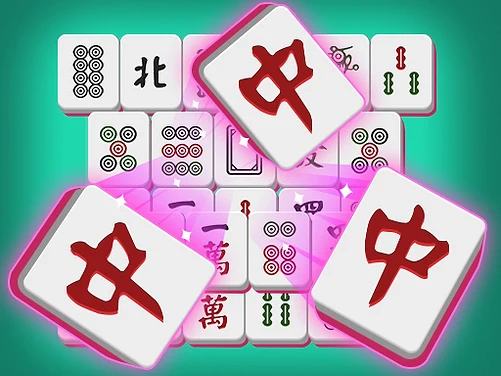
Mahjong Solitaire is a classic tile-matching puzzle game inspired by traditional Mahjong, focusing on logic, planning, and calm decision-making. In Mahjong Solitaire, players clear the board by matching identical tiles that are free on at least one side. With elegant tile designs and layered layouts, Mahjong Solitaire delivers a timeless casual experience suitable for both beginners and experienced puzzle fans.
Mahjong Stack
Mahjong Stack is a fast-paced Mahjong puzzle game where tiles fall from above and stack into tall towers. Unlike classic Mahjong, Mahjong Stack challenges players to react quickly while managing growing tile columns. The game blends matching logic with dynamic stacking mechanics, creating a unique and engaging Mahjong experience.
Mahjong 3D Match
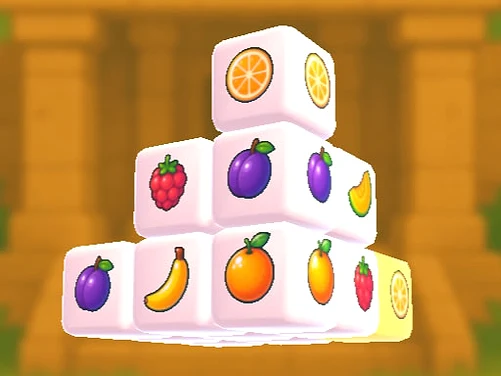
Mahjong 3D Match transforms classic Mahjong into a vibrant three-dimensional puzzle experience. Players explore towers, pyramids, and creative 3D structures while matching identical tiles. Mahjong 3D Match combines spatial awareness with traditional Mahjong logic for a fresh puzzle challenge.
Mahjong Solitaire: Hero
Mahjong Solitaire: Hero is a relaxing Mahjong puzzle game featuring beautifully crafted layouts and a heroic visual theme. The game focuses on calm, thoughtful gameplay, offering players multiple layouts and adjustable pacing for a personalized Mahjong Solitaire experience.
Frequently Asked Questions
What is a good win rate for Mahjong Solitaire?
Beginners typically win 40-50% of games. Intermediate players win 60-70%. Advanced players consistently win 75-85% of games. Win rates above 90% are rare even for experts because some board configurations are mathematically unsolvable. If you're currently winning 50% of games, applying the strategies in this guide can realistically push you to 65-75% within a few weeks of practice.
How long does it take to get good at Mahjong Solitaire?
You'll see noticeable improvement after just 10-20 games if you play deliberately and apply strategies. Most players reach intermediate level (60-70% win rate) after 100-150 games, typically 1-2 months of regular play. Advanced mastery (75-85% win rate) usually takes 300-500 games over 3-6 months. The key is deliberate practice—actively thinking about strategy rather than mindlessly clicking.
Are some Mahjong Solitaire layouts harder than others?
Absolutely! Layout difficulty varies dramatically. Simple layouts with 72-96 tiles and 2-3 layers are easy (85-95% win rate). Standard 144-tile layouts like Turtle are medium difficulty (70-80% win rate). Complex layouts like Dragon or Scorpion with 7-8 layers and bottleneck sections are hard (50-65% win rate). Start with easier layouts to build confidence and skills, then progress to harder layouts as you improve.
Should I use hints when learning?
Yes, but strategically! When you're first learning (first 20-30 games), use hints to understand tile patterns and matching strategies. Study why the hint suggests particular matches. After you understand the basics, challenge yourself to play 2-3 games without hints to develop natural pattern recognition. By game 50-100, you should rarely need hints except in genuinely stuck situations. Think of hints as training wheels—helpful when learning, but you want to eventually play without them.
What's the single most important tip for winning?
If you only remember one thing: always check for identical tiles stacked vertically before making any match. This single awareness prevents the #1 beginner mistake (matching a tile only to discover its pair is trapped underneath) and can improve your win rate by 15-20% immediately. It's simple, easy to remember, and dramatically effective.
Can you always win at Mahjong Solitaire with perfect play?
No. Some board configurations are mathematically unsolvable regardless of strategy. However, most online Mahjong Solitaire games use carefully designed layouts that are winnable with good play. If you're losing frequently, it's usually due to strategy mistakes rather than impossible boards. With the techniques in this guide, you should be able to win 75-85% of standard layouts—the remaining 15-25% are genuinely difficult or impossible boards.
🎯 Continue Your Mahjong Journey
Now that you know how to win, explore these related guides and games:
📚 How to Play Mahjong Solitaire
Complete beginner guide with rules, step-by-step instructions, and practice games
👵 Mahjong for Seniors
Easy Mahjong games with large tiles, simple layouts, and senior-friendly features
🏠 Browse All Mahjong Games
100+ free Mahjong Solitaire games with different layouts and difficulty levels
🧩 More Puzzle Games
Explore other brain-teasing puzzle games to challenge yourself
🎊 Start Winning More Games Today!
You now have all the tools to dramatically improve your Mahjong Solitaire win rate. Remember the core strategies: prioritize top layer and edge tiles, avoid stacking identical tiles, think 2-3 moves ahead, and match tiles that unlock the most other tiles. Apply these techniques deliberately in your next 10-20 games and watch your win rate climb!
The secret to mastery isn't talent—it's deliberate practice. Every expert player started where you are now. Play regularly, apply these strategies consciously, learn from your mistakes, and celebrate your progress. Within a few weeks, you'll be winning 70-80% of games and wondering how you ever struggled!