Best Mahjong Solitaire Strategies for Beginners
Learning Mahjong Solitaire strategies is the key to transforming from a struggling beginner into a confident player who regularly completes boards. While the basic rules are simple—match identical tiles—winning consistently requires strategic thinking, pattern recognition, and careful planning. This comprehensive beginner's guide reveals proven strategies that will help you avoid dead ends, recognize winning patterns, plan multiple moves ahead, and dramatically improve your completion rate. Whether you're winning only 30% of games or looking to push past 70%, these strategies will level up your Mahjong Solitaire skills!
🎯 5 Essential Strategies Every Beginner Must Know
- 1.Always prioritize top layer tiles – they unlock the most tiles underneath
- 2.Match from edges inward – prevents trapping identical tiles beneath each other
- 3.Count visible copies before matching – every tile appears 4 times on the board
- 4.Think 2-3 moves ahead – visualize what tiles will be revealed after each match
- 5.Identify bottlenecks early – narrow sections where wrong moves trap many tiles
Why Strategy Matters in Mahjong Solitaire
Many beginners think Mahjong Solitaire is pure luck—just match whatever tiles you see and hope for the best. This couldn't be further from the truth! While some board configurations are genuinely unsolvable, the vast majority of games are winnable with proper strategy.
The Strategic Difference:
- • Random play: 30-40% win rate, frequent dead ends, frustration
- • Basic strategy: 50-60% win rate, occasional wins, some satisfaction
- • Good strategy: 70-80% win rate, consistent wins, enjoyable gameplay
- • Expert strategy: 85-90% win rate, rare losses, mastery achieved
The difference between random play and strategic play is night and day. Applying even basic strategies can boost your win rate by 20-30% within just a few games!
Master Pattern Recognition: See Matches Instantly
Pattern recognition is the foundation of excellent Mahjong Solitaire play. Expert players don't hunt for matches—they see them instantly. Here's how to develop this crucial skill:
🎨 Pattern Strategy #1: Scan by Category
The Technique: Don't scan the entire board randomly. Instead, look for one tile category at a time.
Tile Categories:
- • Bamboo (Sticks): Green designs, numbers 1-9
- • Characters (Wan): Red/black Chinese characters, numbers 1-9
- • Circles (Dots): Round dots, numbers 1-9
- • Winds: East, South, West, North (4 of each)
- • Dragons: Red, Green, White (4 of each)
How to Apply: First pass—scan only for Bamboo tiles. Second pass—only Characters. Third—Circles. Fourth—Winds and Dragons. This systematic approach is 3x faster than random scanning and you'll miss fewer matches.
👁️ Pattern Strategy #2: Use Color Recognition
The Technique: Train your peripheral vision to spot matching colors before consciously identifying specific tiles.
Why It Works: Your brain processes color faster than detailed shapes. Bamboo tiles have green tones, Characters have red/black, Circles have blue/white, and Dragons have distinct solid colors.
How to Apply: Don't focus intensely on one spot. Use "soft focus"—relax your eyes and let your peripheral vision catch matching color patterns across the board. This feels awkward at first but becomes natural with practice.
🔢 Pattern Strategy #3: Group by Numbers
The Technique: Mentally group tiles into low (1-3), medium (4-6), and high (7-9) numbers.
How to Apply: When you see a tile, quickly categorize it: "That's a low-number Bamboo" or "That's a high-number Circle." This chunking reduces cognitive load and speeds up pattern recognition dramatically.
Planning Moves Ahead: Think Like a Chess Player
The single biggest difference between beginners and advanced players? Advanced players think multiple moves ahead. Here's how to develop this critical skill:
♟️ Planning Step 1: Visualize the Next Layer
Before making any match, ask yourself: "What tiles will be revealed when I remove these two tiles?"
Most tiles block 1-3 tiles underneath them. By removing a pair, you're revealing 2-6 new tiles. Try to visualize what those tiles might be and whether you'll have matches available for them.
💡 Beginner Exercise: For your next 5 games, pause before each move and consciously ask "What gets revealed?" This deliberate practice builds the skill quickly.
🎯 Planning Step 2: Identify "Unlock Chains"
The Concept: An "unlock chain" is a sequence where matching Tile A reveals Tile B, which allows you to match Tile C, and so on.
Good players plan 2-3 move chains. Great players plan 4-5 move chains. When you can see these sequences, you're playing strategically rather than reactively.
How to Practice: Look for tiles that are currently blocked. Trace backward: "To match those, I need to remove this tile, which requires removing that tile first..." You're creating a roadmap to clear difficult sections.
⚡ Planning Step 3: Recognize "Forced Moves"
The Concept: A "forced move" is when a tile has only one possible match remaining. These tiles create decision points that determine the correct move order.
Strategy: Identify tiles with limited matching options. If a tile has only one possible partner, you MUST ensure you can eventually access both. This awareness prevents 90% of dead-end situations.
Avoiding Dead Ends: Prevention is Everything
Dead ends happen when tiles remain but no matches are possible. Most dead ends are preventable with awareness and strategy. Here are the most common traps and how to avoid them:
🚫Dead End Trap #1: The Stacked Trap
What It Is: Matching a tile when its identical partner is stacked directly underneath it, making that pair forever inaccessible.
Why It Happens: You see a matching pair on the surface and click without checking what's beneath.
✓ Prevention: Before matching any tile, always check if an identical tile sits directly below it. If yes, find a different match first. This single awareness prevents 50% of beginner dead ends!
⚠️Dead End Trap #2: The Four-Tile Mistake
What It Is: Matching both pairs of a 4-tile group too quickly, before understanding the board layout fully.
Example: You see all four "Red Dragon" tiles free. You match two pairs immediately. Later, you discover this trapped other tiles that needed those Dragons to be matched in a specific order.
✓ Prevention: When 3-4 copies of a tile are visible, resist matching all pairs immediately. Clear one pair, observe what's revealed, then decide on the second pair. Patience prevents traps.
🔒Dead End Trap #3: Bottleneck Blunders
What It Is: Matching tiles in narrow "bottleneck" sections without planning, trapping entire sections of the board.
Where They Occur: Look for narrow bridges, pinch points, or sections where many tiles funnel through a few key tiles (common in Dragon, Scorpion layouts).
✓ Prevention: Identify bottlenecks at game start. Treat these sections with extreme caution—think 3-4 moves ahead before matching any bottleneck tiles. Clear surrounding areas first.
⛔Dead End Trap #4: Edge Neglect
What It Is: Ignoring edge tiles and focusing on center tiles, causing edge tiles to trap their matches underneath.
Why It's Dangerous: Edge tiles on the far left and right often have their matching partners hidden beneath them. If you don't clear them early, you create trapped pairs.
✓ Prevention: Prioritize edge tiles over center tiles when both are available. The maxim "edges first, center later" prevents countless dead ends.
Improving Your Completion Rate: From 50% to 75%+
Ready to dramatically improve your completion rate? These advanced techniques will push you from intermediate to advanced level:
📈 10 Techniques to Boost Completion Rate
- 1Play the same layout repeatedly: Familiarity with a specific layout teaches you its unique patterns and traps. Play your favorite layout 20+ times to master it completely.
- 2Use the undo feature strategically: Don't undo every mistake immediately. Try playing 3-5 moves forward to see consequences. If it's a dead end, undo and try a different path.
- 3Slow down in the endgame: When 20-30 tiles remain, take twice as long per move. Endgame mistakes cost you wins you've already earned.
- 4Count remaining tile types in endgame: With few tiles left, you can mentally track all remaining pairs. This turns the endgame into a logic puzzle.
- 5Learn layout-specific strategies: Turtle layout has different danger zones than Dragon or Pyramid. Each layout has unique characteristics—learn them!
- 6Track Wind and Dragon tiles carefully: Only 4 of each type exist (vs. 4 of each number × 3 suits). Running out of Dragon matches happens fast—plan accordingly.
- 7Create mental "zones": Divide the board into 4-6 zones. Clear systematically zone-by-zone rather than jumping randomly around the board.
- 8Study your losses: When you lose, undo 15-20 moves and replay. Often you'll spot where the critical mistake happened. Learning from losses accelerates improvement.
- 9Practice peripheral vision scanning: Use soft focus to see the whole board at once. Your peripheral vision catches patterns faster than focused attention.
- 10Set completion rate goals: Track your wins over 20-50 games. Aim to improve 5% every 2 weeks. This goal-setting approach creates measurable progress.
Practice These Strategies: Recommended Games
Theory means nothing without practice! Try these Mahjong Solitaire games to apply the strategies you've learned:
Mahjong Solitaire
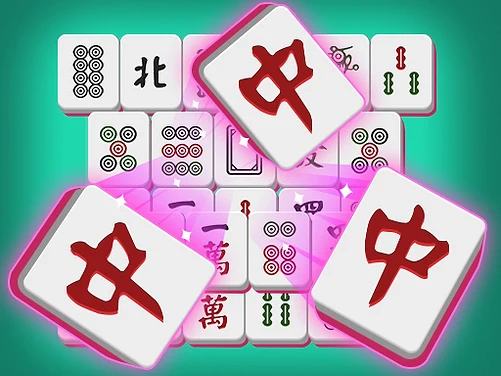
Mahjong Solitaire is a classic tile-matching puzzle game inspired by traditional Mahjong, focusing on logic, planning, and calm decision-making. In Mahjong Solitaire, players clear the board by matching identical tiles that are free on at least one side. With elegant tile designs and layered layouts, Mahjong Solitaire delivers a timeless casual experience suitable for both beginners and experienced puzzle fans.
Mahjong Stack
Mahjong Stack is a fast-paced Mahjong puzzle game where tiles fall from above and stack into tall towers. Unlike classic Mahjong, Mahjong Stack challenges players to react quickly while managing growing tile columns. The game blends matching logic with dynamic stacking mechanics, creating a unique and engaging Mahjong experience.
Mahjong 3D Match
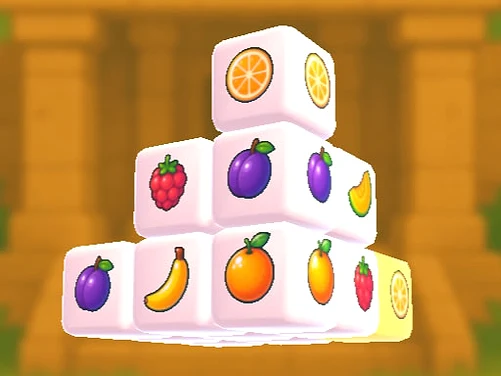
Mahjong 3D Match transforms classic Mahjong into a vibrant three-dimensional puzzle experience. Players explore towers, pyramids, and creative 3D structures while matching identical tiles. Mahjong 3D Match combines spatial awareness with traditional Mahjong logic for a fresh puzzle challenge.
Frequently Asked Questions
How long does it take to get good at Mahjong Solitaire strategy?
With deliberate practice applying these strategies, you'll see noticeable improvement within 10-20 games (1-2 weeks of casual play). Most players reach 60-70% completion rates after 50-100 games (1-2 months). Advanced mastery (75-85% completion) typically requires 200-300 games (3-6 months). The key is deliberate practice—actively thinking about strategy rather than mindlessly clicking. Players who consciously apply one new strategy per session improve 2-3x faster than those who just play without reflection.
What's the most important strategy for beginners?
The single most impactful strategy for beginners is: Always check for stacked identical tiles before making any match. This prevents the #1 beginner mistake—matching a tile only to discover its partner is trapped underneath forever. This awareness alone can boost your completion rate from 40% to 55-60% immediately. Once you've mastered this, add "top layer priority" and "edge tiles first" as your next strategies.
Should I memorize specific tile positions?
No! Don't try to memorize exact tile positions—it's unnecessary and ineffective. Instead, focus on recognizing types of patterns and configurations (bottlenecks, stacked pairs, edge tiles, unlock chains). Your brain will naturally start remembering common arrangements after 50-100 games without forced memorization. Think of it like learning to read—you don't memorize every word, you recognize patterns. The same applies to Mahjong Solitaire strategy.
How do I know when I'm thinking far enough ahead?
A good benchmark: Beginners think 1 move ahead (just the current match), intermediate players think 2-3 moves ahead (what gets revealed + next match), and advanced players think 4-5+ moves ahead (entire unlock chains). Start by consciously planning just 2 moves ahead—that alone puts you above most casual players. As this becomes natural, extend to 3 moves, then 4. You'll know you're thinking far enough ahead when you rarely encounter unexpected dead ends. If dead ends surprise you, you need to plan further ahead.
Are some layouts impossible to complete?
Yes, some board configurations are mathematically unsolvable even with perfect play—typically 5-15% depending on the layout and random tile placement. However, most online Mahjong Solitaire games use algorithms to generate solvable boards, so unsolvable games are rare in well-designed versions. If you're losing 50%+ of games, it's almost certainly strategy issues, not impossible boards. Even expert players can't win every game, but good strategy should get you to 75-85% completion rates on standard layouts.
Should I play slowly or quickly?
When learning: play slowly and deliberately. Take 10-15 seconds per move to apply strategies consciously. Speed comes naturally with practice—rushing while learning just reinforces bad habits. Once you've internalized strategies (100+ games), you can speed up naturally as pattern recognition becomes automatic. Even expert players slow down in critical situations (bottlenecks, endgame). The goal isn't speed—it's winning. A thoughtful 15-minute win beats a rushed 5-minute loss every time.
Can I become too strategic and overthink moves?
Yes, overthinking is possible but rare among beginners and intermediate players. Most players under-think rather than overthink. If you find yourself paralyzed, spending 5+ minutes per move, you're overthinking. The sweet spot is 10-20 seconds per move for most situations, extending to 30-45 seconds for critical endgame decisions. Trust your instincts once you've checked for obvious traps. Analysis paralysis hurts enjoyment—Mahjong Solitaire should be fun, not stressful!
🎓 Continue Your Learning Journey
Master Mahjong Solitaire with these complementary guides:
🎯 Start Applying These Strategies Today!
You now have a complete strategic foundation for Mahjong Solitaire success! Remember: strategy isn't about memorization—it's about developing awareness and decision-making skills. Start by focusing on just one strategy per session:
Your 7-Day Strategy Training Plan:
- • Day 1-2: Focus only on checking for stacked identical tiles
- • Day 3-4: Add top layer priority to your awareness
- • Day 5: Practice scanning by tile category
- • Day 6: Focus on planning 2 moves ahead
- • Day 7: Combine all strategies and track your completion rate
Follow this plan for 1-2 weeks, playing 3-5 games per day. You'll be amazed at how quickly your completion rate improves! Strategy transforms Mahjong Solitaire from a frustrating guessing game into an enjoyable, rewarding puzzle experience.
Ready to put your new strategies into practice? Choose a game below and start your journey to Mahjong Solitaire mastery today!