Common Mahjong Solitaire Mistakes and How to Avoid Them
Are you frustrated by Mahjong Solitaire games that end in dead ends? You're not alone! Most players—even experienced ones—make predictable mistakes that turn winnable boards into losses. The good news? Once you recognize these errors, they're easily preventable. This comprehensive guide reveals the top 15 Mahjong Solitaire mistakes that cost players wins, complete with real examples, recovery tactics when possible, and prevention strategies. Whether you're a beginner making fundamental errors or an intermediate player hitting a skill plateau, understanding these mistakes will instantly improve your completion rate!
⚠️ The 5 Costliest Mistakes (Fix These First!)
- 1.Matching tiles without checking for stacked pairs underneath – causes 40% of beginner dead ends
- 2.Matching too quickly without planning ahead – reactive play instead of strategic play
- 3.Ignoring edge tiles until too late – traps pairs beneath edge tiles
- 4.Clearing all 4 copies of a tile without thinking – eliminates future options
- 5.Over-relying on hints instead of learning patterns – prevents skill development
Understanding Mistake Categories
Mahjong Solitaire mistakes fall into three categories: Beginner mistakes (fundamental errors), Intermediate mistakes (strategy failures), and Universal mistakes (errors even experts occasionally make). Let's explore all 15 in detail!
Beginner Mistakes (1-7): Foundation Errors
The Stacked Pair Trap
SEVERITY: Critical | FREQUENCY: Very Common
The Mistake: You match a tile without noticing an identical tile is stacked directly below it. After matching, you realize the buried tile can never be matched—it's trapped forever.
Example: You match two "Red Dragon" tiles on the surface. Unknown to you, a third Red Dragon sits directly beneath one of them. That third tile is now permanently blocked.
Why It Happens: Players focus on surface matches without scanning vertically through layers.
✓ Prevention:
Before matching ANY tile, always check: "Is there an identical tile directly below this one?" Make this a habit—it prevents 40% of beginner dead ends instantly.
🔧 Recovery:
If you've just made this mistake (within 1-2 moves), use undo immediately. If discovered later, the game is usually unwinnable—restart and learn from it.
Matching Too Quickly
SEVERITY: High | FREQUENCY: Very Common
The Mistake: Clicking the first matching pair you see without considering alternatives or consequences.
Example: You spot two "Bamboo 5" tiles next to each other and immediately match them. Later, you discover this blocked access to critical tiles underneath that could have been matched in a better sequence.
Why It Happens: Impatience and not understanding that Mahjong Solitaire rewards planning over speed.
✓ Prevention:
Take 5-10 seconds before each move. Ask: "Is there a better match? What tiles will this reveal? Are there alternatives?" Speed comes naturally with practice—prioritize smart moves over fast moves.
🔧 Recovery:
Use undo liberally when learning. If a quick match leads to problems within 2-3 moves, backtrack and try a different sequence.
Ignoring Edge Tiles
SEVERITY: High | FREQUENCY: Common
The Mistake: Focusing on center tiles while leaving edge tiles (far left and right) unmatched until too late.
Example: The board has edge tiles available, but you match center tiles instead. Later, you discover the edge tiles' matching partners are now trapped beneath them.
Why It Happens: Edge tiles seem less important, but they're actually more dangerous because their matches often end up buried beneath them.
✓ Prevention:
Follow the "edges first, center later" principle. When choosing between two matches, prioritize the one that includes edge tiles. Edge tiles are time-sensitive!
🔧 Recovery:
If edge tiles remain late in the game with no visible matches, check if undo can help you rearrange the clearing sequence to free them earlier.
The Four-Tile Rush
SEVERITY: Medium-High | FREQUENCY: Common
The Mistake: Seeing 3-4 copies of a tile available and matching all pairs immediately without understanding the board.
Example: All four "Wind East" tiles are free. You excitedly match both pairs. Later, you realize matching them in this order trapped tiles that needed the Winds to be cleared in a specific sequence.
Why It Happens: The temptation to clear "obvious" matches without strategic thinking.
✓ Prevention:
When multiple copies of a tile are visible, clear ONE pair first. Observe what gets revealed. Then decide if clearing the second pair makes sense. Patience prevents traps.
🔧 Recovery:
If realized quickly (within 3-4 moves), undo and take a more measured approach. If discovered late, the board may be unwinnable.
Not Checking "Free" Status
SEVERITY: Medium | FREQUENCY: Common for New Players
The Mistake: Attempting to match tiles that look identical but aren't both "free" (unblocked on left/right sides).
Example: You see two "Circle 3" tiles but only one is free. You keep clicking, frustrated that the match won't work, wasting time and focus.
Why It Happens: Not fully understanding the "free tile" rule or not carefully checking tile status before clicking.
✓ Prevention:
Most games highlight free tiles when you hover over them. Before clicking, verify both tiles in your intended match are actually free. This becomes automatic with practice.
🔧 Recovery:
No recovery needed—this mistake doesn't damage the board, it just wastes time. Learn the free tile rules thoroughly to avoid frustration.
Over-Relying on Hints
SEVERITY: Low-Medium | FREQUENCY: Very Common
The Mistake: Using the hint button constantly instead of developing pattern recognition skills.
Example: Every 2-3 moves, you click hint to find matches rather than searching yourself. Your win rate stays low because you're not learning the game.
Why It Happens: Hints feel helpful, but overuse prevents you from developing the visual scanning and pattern recognition skills that lead to improvement.
✓ Prevention:
Challenge yourself: complete 3 full games without using ANY hints. It feels hard at first, but forces rapid skill development. Use hints only when genuinely stuck after thorough searching.
🔧 Recovery:
Gradual reduction: if you use hints 15 times per game, try reducing to 10, then 5, then 2-3. Track your usage to see improvement.
Random Tile Scanning
SEVERITY: Medium | FREQUENCY: Universal for New Players
The Mistake: Searching the entire board randomly instead of using systematic scanning methods.
Example: Your eyes dart around the board chaotically, missing obvious matches and taking 3x longer to find pairs.
Why It Happens: Not knowing that systematic scanning (by category, by color, by zone) is dramatically more efficient.
✓ Prevention:
Adopt systematic scanning: First pass—scan only Bamboo tiles. Second pass—only Characters. Third—Circles. Fourth—Winds & Dragons. This organized approach is 3-4x faster.
🔧 Recovery:
Practice the systematic method deliberately for 10-20 games. It feels awkward initially but becomes natural and dramatically speeds up your play.
Intermediate Mistakes (8-12): Strategy Failures
These mistakes affect players who understand the basics but struggle to reach 70%+ win rates. Fixing these elevates your game significantly.
One-Move Thinking
SEVERITY: High | FREQUENCY: Very Common
The Mistake: Only thinking about the current match without planning 2-3 moves ahead.
Example: You match a pair that looks good, but it blocks a critical sequence you needed 5 moves later. Thinking ahead would have revealed this.
Why It Happens: Reactive play instead of strategic play—treating Mahjong like a simple matching game rather than a puzzle requiring forethought.
✓ Prevention:
Before every match, ask: "What tiles will this reveal? Can I match those next? What about the move after that?" Train yourself to visualize 2-3 moves ahead minimum.
🔧 Recovery:
When stuck in a dead end, use extensive undo (10-15 moves) to find where planning ahead would have prevented the problem.
Ignoring Bottlenecks
SEVERITY: Critical | FREQUENCY: Common
The Mistake: Not identifying narrow "bottleneck" sections where many tiles funnel through a few key tiles, then matching those key tiles carelessly.
Example: In a Dragon layout, there's a narrow bridge connecting two sections. You match tiles in that bridge without planning, trapping 30+ tiles on one side.
Why It Happens: Not recognizing layout-specific danger zones and treating all matches as equally safe.
✓ Prevention:
At game start, identify bottlenecks (narrow bridges, pinch points). Treat these sections with extreme caution—think 4-5 moves ahead before matching any bottleneck tiles.
🔧 Recovery:
Bottleneck mistakes are usually catastrophic. Extensive undo (15-20+ moves) may help, but often requires restarting. Prevention is everything.
Neglecting Top Layer Priority
SEVERITY: Medium-High | FREQUENCY: Common
The Mistake: Matching lower-layer tiles when top-layer tiles are available, missing the opportunity to unlock multiple tiles beneath.
Example: You have a choice between matching two tiles on layer 3 or two on layer 5 (top). You match layer 3, missing the chance to reveal 4-6 tiles hidden under layer 5.
Why It Happens: Not understanding that top tiles block the most other tiles and should almost always be prioritized.
✓ Prevention:
Adopt the "top-down" principle: always prefer matching top-layer tiles over deeper tiles when both options exist. This maximizes revealed tiles and options.
🔧 Recovery:
If you've been ignoring top tiles, pause and deliberately clear all available top tiles before continuing deeper. Use undo if you've created problems.
Forgetting Tile Count (4 of Each)
SEVERITY: Medium | FREQUENCY: Common
The Mistake: Not remembering that every tile appears exactly 4 times, leading to surprise dead ends when you've already matched 2 and the other 2 are now buried.
Example: You can only see 2 copies of "Bamboo 7". You match them without considering where the other 2 might be. Later, you discover both are trapped beneath edge tiles—game over.
Why It Happens: Not tracking tile distribution or thinking about where hidden copies might be located.
✓ Prevention:
Before matching a pair where you only see 2 copies total, think: "Where might the other 2 be? If they're buried, is this match safe?" When 3-4 copies are visible, matches are much safer.
🔧 Recovery:
Track Dragon and Wind tiles especially carefully (only 4 of each type vs. 12 of each numbered tile). If you've trapped a pair, extensive undo may help.
Rushing the Endgame
SEVERITY: High | FREQUENCY: Common
The Mistake: Playing the endgame (last 20-30 tiles) at the same speed as the early game, making careless mistakes when victory is nearly guaranteed.
Example: With 25 tiles remaining and victory in sight, you make a hasty match that creates an unsolvable situation—snatching defeat from the jaws of victory.
Why It Happens: Excitement and impatience when winning seems certain, leading to loss of focus.
✓ Prevention:
When 20-30 tiles remain, deliberately slow down. Take 15-20 seconds per move instead of 5-10. With few tiles left, you can analyze every option—use that advantage!
🔧 Recovery:
Endgame mistakes often have recovery options because fewer tiles means more undo potential. Backtrack 10-15 moves and try different sequences.
Universal Mistakes (13-15): Even Experts Make These
These mistakes can affect players at any skill level. Awareness is key to avoiding them.
Assuming Symmetrical Tile Placement
SEVERITY: Medium | FREQUENCY: Occasional
The Mistake: In symmetrical layouts (like Turtle), assuming tile placement is also symmetrical—then being surprised when it's not.
Example: You find "Character 8" on the left side and assume its match is in the mirror position on the right. It's not there—wasted time and broken strategy.
Why It Happens: Visual layouts are often symmetrical, but tile distribution is usually random, not mirrored.
✓ Prevention:
Use symmetry as a scanning hint (check mirror positions first), but don't assume matches will be there. Symmetrical layouts help with spatial scanning, not tile placement prediction.
🔧 Recovery:
No board damage from this mistake—it just wastes time. Adjust your mental model and continue playing.
Not Using Undo Strategically
SEVERITY: Low-Medium | FREQUENCY: Common
The Mistake: Either never using undo (pride/stubbornness) OR using it reflexively after every move without learning from mistakes.
Example Type A: You make a mistake but refuse to undo, playing out an unwinnable board "on principle."
Example Type B: You undo immediately after every less-than-perfect move without understanding why it was wrong.
Why It Happens: Misunderstanding undo as "cheating" or using it as a crutch without reflection.
✓ Prevention:
Use undo as a learning tool. When you make a mistake, undo 5-10 moves and replay, consciously thinking about better choices. In endgame, liberal undo use to explore sequences is smart play, not cheating.
🔧 Recovery:
Develop healthy undo habits: use it deliberately to learn, not reflexively to avoid consequences. Undo is a training tool that accelerates improvement.
Playing When Frustrated or Tired
SEVERITY: Medium | FREQUENCY: Universal
The Mistake: Continuing to play when you're frustrated from losses or mentally tired, leading to worse decision-making and more losses—a negative spiral.
Example: After losing 3 games in a row, you're frustrated and play a 4th game poorly, making careless mistakes you'd never make when fresh.
Why It Happens: Wanting to "end on a win" or not recognizing mental fatigue affecting performance.
✓ Prevention:
Set a "stop rule": after 2-3 consecutive losses or when you notice frustration, take a break. Return when refreshed. Your best play comes when you're calm and focused.
🔧 Recovery:
Recognition is recovery. If you notice frustration or fatigue affecting your play, close the game immediately. A 30-minute break restores quality play.
Quick Reference: Mistakes by Impact
| # | Mistake | Severity | Fix Priority |
|---|---|---|---|
| 1 | Stacked Pair Trap | Critical | Fix First |
| 2 | Matching Too Quickly | High | Fix Second |
| 3 | Ignoring Edge Tiles | High | Fix Third |
| 8 | One-Move Thinking | High | Intermediate |
| 9 | Ignoring Bottlenecks | Critical | Intermediate |
| 12 | Rushing the Endgame | High | Intermediate |
Practice Mistake-Free Play
Now that you know what to avoid, practice these strategies in real games:
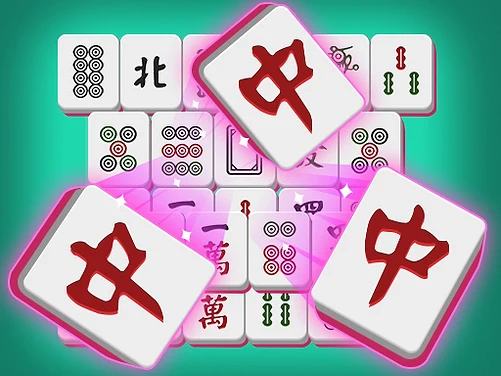
Mahjong Solitaire
Mahjong Solitaire is a classic tile-matching puzzle game inspired by traditional Mahjong, focusing on logic, planning, and calm decision-making. In Mahjong Solitaire, players clear the board by matching identical tiles that are free on at least one side. With elegant tile designs and layered layouts, Mahjong Solitaire delivers a timeless casual experience suitable for both beginners and experienced puzzle fans.
Mahjong Stack
Mahjong Stack is a fast-paced Mahjong puzzle game where tiles fall from above and stack into tall towers. Unlike classic Mahjong, Mahjong Stack challenges players to react quickly while managing growing tile columns. The game blends matching logic with dynamic stacking mechanics, creating a unique and engaging Mahjong experience.
Mahjong 3D Match
Mahjong 3D Match transforms classic Mahjong into a vibrant three-dimensional puzzle experience. Players explore towers, pyramids, and creative 3D structures while matching identical tiles. Mahjong 3D Match combines spatial awareness with traditional Mahjong logic for a fresh puzzle challenge.
Frequently Asked Questions
What's the single biggest mistake beginners make?
The stacked pair trap (Mistake #1) is by far the most common and costly beginner error. Not checking for identical tiles stacked beneath matches causes approximately 40% of beginner dead ends. The good news? It's completely preventable with a simple awareness check before every match. Making this one habit can boost your win rate from 40% to 55-60% immediately. Once you've mastered avoiding stacked pairs, add edge tile priority and systematic scanning to continue improving.
How can I tell which mistakes I'm making?
Track your losses! When you lose a game, use extensive undo (15-20 moves) to replay and identify where things went wrong. Common patterns emerge: if you're frequently surprised by trapped pairs, you're likely making stacked pair mistakes. If dead ends happen in narrow sections, you're missing bottlenecks. If you lose winnable endgames, you're rushing. Keep a simple note after 5-10 losses: "Lost to stacked pairs (3x), bottleneck mistake (1x), rushed endgame (1x)." This reveals your personal mistake patterns.
Should I focus on fixing all mistakes or just a few?
Focus on fixing 2-3 mistakes at a time, not all 15! Trying to avoid every mistake simultaneously is overwhelming and counterproductive. Start with the "Big 3": (1) Check for stacked pairs, (2) Don't match too quickly, (3) Prioritize edge tiles. Practice these deliberately for 20-30 games until they become habits. Then add the next 2-3. This progressive approach leads to lasting improvement, while trying to fix everything at once leads to frustration and minimal progress.
Do expert players still make these mistakes?
Yes, occasionally! Even experts sometimes rush moves (#2), forget to check for stacked pairs in complex situations (#1), or play when tired/frustrated (#15). The difference is frequency—beginners make these mistakes 60-80% of the time, while experts make them less than 10% of the time. Additionally, experts recover faster using undo and adaptive strategies. The goal isn't perfection (impossible), but rather reducing mistake frequency from "constant" to "rare." Aim for 80-90% mistake-free play, not 100%.
Can mistakes be completely eliminated with practice?
Not entirely—humans make occasional errors even with expertise. However, with 200-500 games of deliberate practice, you can reduce beginner mistakes (1-7) to near-zero frequency. Intermediate mistakes (8-12) require more experience but become rare after 300-500 games. Universal mistakes (13-15) can occur even at expert level but become infrequent. The realistic goal is 75-85% win rate on standard layouts, which means 15-25% losses from combination of mistakes, impossible boards, and bad luck. Perfect play (0 mistakes) is theoretically possible but practically very rare even for experts.
How long does it take to stop making common mistakes?
Timeline varies by mistake type and practice quality. Stacked pair awareness can be learned in 5-10 games of conscious practice. Systematic scanning becomes natural after 20-30 games. Planning 2-3 moves ahead develops over 50-100 games. Bottleneck recognition requires 100-200 games to master. The key word is "deliberate practice"—actively focusing on avoiding specific mistakes accelerates learning 2-3x compared to mindless play. Players who consciously work on one mistake at a time for 2 weeks see dramatic improvement. Those who just play without reflection plateau quickly.
📚 Master Mahjong Solitaire
Complement your mistake knowledge with these essential guides:
🎯 Start Avoiding Mistakes Today!
You now know the 15 most common Mahjong Solitaire mistakes and exactly how to avoid them! Remember: don't try to fix all 15 at once. Use this proven progression plan:
Your 4-Week Mistake-Free Plan:
- • Week 1: Focus ONLY on checking for stacked pairs before every match
- • Week 2: Add edge tile priority and slow down your clicking speed
- • Week 3: Practice planning 2 moves ahead and systematic scanning
- • Week 4: Combine all techniques and start recognizing bottlenecks
After 4 weeks following this plan (playing 3-5 games daily), you'll have eliminated 70-80% of your mistakes. Your completion rate will soar, frustration will disappear, and Mahjong Solitaire will transform from a confusing puzzle into an enjoyable, winnable game!
Remember: Every expert player made these exact mistakes when learning. The difference? They recognized them, learned from them, and systematically eliminated them. Now it's your turn!