Mahjong Solitaire Tips for Faster Completion ⚡
Want to complete Mahjong Solitaire boards faster without sacrificing win rate? Speed in Mahjong isn't about rushing—it's about efficiency, pattern recognition mastery, and eliminating wasted time. Whether you're aiming for competitive times, trying to beat personal records, or simply want more satisfying gameplay, these proven speed strategies and time-saving techniques will transform your play. This comprehensive guide reveals how expert players complete boards in half the time of average players while maintaining 80%+ win rates. Ready to level up your speed? Let's go!
⚡ 5 Speed Tips (Apply Immediately!)
- 1.Use peripheral vision scanning – see whole board at once instead of focusing tile-by-tile
- 2.Learn keyboard shortcuts – eliminate mouse movement time (undo, hint, new game)
- 3.Play the same layout repeatedly – familiarity breeds speed (20+ completions)
- 4.Match in "zones" – clear systematically by board section, not randomly
- 5.Eliminate decision paralysis – good move now beats perfect move in 30 seconds
Understanding Speed vs. Strategy Balance
The biggest misconception about speed is that it requires sacrificing strategy. Wrong! Expert players are fast BECAUSE they're strategic, not despite it. Speed comes from three sources: (1) Automatic pattern recognition, (2) Efficient decision-making, and (3) Eliminating wasted movements. Let's master all three.
⚖️ The Speed-Strategy Balance
• Slow + Strategic: 70-80% win rate, 15-25 min/game → Good foundation
• Fast + Careless: 40-50% win rate, 5-8 min/game → Frustrating losses
• Fast + Strategic: 75-85% win rate, 8-12 min/game → Expert level! 🎯
Our goal: achieve expert-level play where speed and strategy work together, not against each other.
Speed Strategies: The 10 Core Techniques
1Master Peripheral Vision Scanning
The Problem: Most players focus intensely on one tile at a time, creating tunnel vision that's incredibly slow.
The Speed Solution: Use "soft focus"—relax your eyes and see the entire board at once. Your peripheral vision is amazing at catching matching patterns without conscious attention.
Practice Drill: Stare at the center of the board without moving your eyes. Notice how you can "see" tiles in your peripheral vision. This soft-focus technique finds matches 3x faster than focused scanning.
2Zone-Based Clearing
The Problem: Jumping randomly around the board wastes eye movement time and creates chaos.
The Speed Solution: Divide the board into 4-6 zones. Clear systematically zone by zone: top-left → top-right → center → bottom sections. Your eyes learn efficient movement patterns.
Time Saved: 15-20% faster completion just from organized scanning. Experts complete boards in predictable patterns, not random chaos.
3Pattern Recognition Automation
The Problem: Consciously identifying each tile ("That's Bamboo 5... where's another Bamboo 5?") is slow.
The Speed Solution: After 100+ games, your brain starts recognizing tiles automatically without conscious thought. Like reading—you don't sound out letters, you just "see" words.
Acceleration Method: Play the SAME layout 30-50 times. This forces pattern automation for that specific configuration, then transfers to other layouts.
4Eliminate Decision Paralysis
The Problem: Spending 30 seconds analyzing which of two "good enough" matches is slightly better.
The Speed Solution: Adopt the "5-Second Rule": If you can't decide between two matches in 5 seconds, pick either—they're probably equivalent. A good move NOW beats a perfect move in 30 seconds.
Mental Shift: 90% of matches don't require deep analysis. Save your thinking time for genuinely critical situations (bottlenecks, endgame).
5Keyboard Shortcut Mastery
The Problem: Moving mouse to click undo button, hint button, or new game wastes 2-5 seconds each time.
The Speed Solution: Learn keyboard shortcuts. Common ones: U = undo, H = hint, N = new game, Escape = menu. Over a full game, keyboard shortcuts save 30-60 seconds.
Pro Tip: Keep left hand on keyboard (shortcuts), right hand on mouse (matching). This dual-hand efficiency is what competitive players use.
Efficient Matching Techniques
Matching efficiency isn't about clicking faster—it's about reducing unnecessary clicks, eliminating backtracking, and creating smooth tile-clearing flows.
⚡ Efficient Technique #1: Top-Down Cascade
Method: Always clear top layers first. As tiles disappear, lower tiles automatically become free—creating a "cascade effect" where new matches appear without searching.
Speed Benefit: Reduces scanning time by 20-30% because tiles reveal themselves in predictable patterns.
⚡ Efficient Technique #2: Batch Similar Tiles
Method: When you see 3-4 copies of a tile free, match them in rapid succession before moving to different tiles. Batching similar matches maintains visual focus.
Speed Benefit: Your eyes don't need to "reorient" to new tile types constantly, maintaining faster matching rhythm.
⚡ Efficient Technique #3: Pre-Plan Next 3 Matches
Method: While clicking one match, your eyes are already identifying the next 2-3 matches. Create a mental queue of upcoming moves.
Speed Benefit: Eliminates "pause time" between matches. Expert players maintain constant clicking rhythm.
⚡ Efficient Technique #4: Mouse Movement Optimization
Method: When matching, click the closer tile first, then the farther tile. Minimize total mouse distance traveled across the board.
Speed Benefit: Sounds minor, but over 70-100 matches per game, optimized mouse movement saves 20-40 seconds.
Time-Saving Techniques: The Details Matter
⏱️ 8 Time-Saving Micro-Optimizations
- 1. Reduce undo usage: Each undo takes 2-3 seconds. Better initial decisions = fewer undos = faster completion
- 2. Minimize hint usage: Searching for 10 seconds is faster than clicking hint (3-5 sec) + processing suggestion (2-3 sec)
- 3. Learn tile differentiation: Quickly distinguishing Bamboo 3 from Bamboo 8 comes with practice—speeds up matching by 15%
- 4. Position your cursor centrally: Keep mouse near board center between matches—reduces movement distance
- 5. Use double-click speed: Adjust mouse double-click speed in settings for faster tile selection
- 6. Reduce screen clutter: Full-screen mode eliminates visual distractions, improving focus and speed
- 7. Optimize brightness/contrast: Tiles should pop visually—proper screen settings improve recognition speed
- 8. Take micro-breaks: Every 3-4 games, take 30-second break—maintains optimal cognitive speed
Competitive Play Tips: Speed Records & Tournaments
Interested in competitive Mahjong Solitaire? Whether racing against friends or attempting speed records, these advanced tips separate winners from also-rans.
🏆 Competitive Tip #1: Specialize in One Layout
Why: Competitive players choose one layout (usually Turtle) and play it 500-1000+ times. This creates muscle memory and unconscious pattern recognition.
Result: Top competitors complete their specialized layout 40-50% faster than random layouts. Your 15-minute general time becomes 8-10 minutes specialized time.
Strategy: For personal records or competition, choose one layout and play it exclusively for 2-3 months. You'll dominate that specific configuration.
🏆 Competitive Tip #2: Optimal Risk-Taking
The Dilemma: In competition, finishing fast but losing is worse than finishing slower but winning. How to balance?
The Formula: Take calculated risks in the first 60-70% of the board (speed priority), then slow down in final 30-40% (accuracy priority). This maximizes speed while maintaining win rate.
Mental Approach: "Fast and confident early, deliberate and careful late" is the competitive mantra. Never rush the endgame.
🏆 Competitive Tip #3: Mental State Management
The Reality: Your fastest times come when you're in "flow state"—relaxed but focused, confident but not cocky.
Pre-Game Routine: Top players warm up with 2-3 casual games before attempting records. This activates pattern recognition without pressure.
The Psychology: Trying TOO hard for speed actually slows you down (tension, mistakes). The fastest times often come when you're "just playing well" without obsessing over time.
Speed Progression: From 20 Minutes to 10 Minutes
Here's a realistic progression timeline for improving your completion speed while maintaining 75%+ win rate:
Baseline: 18-25 minutes
Focus on accuracy, not speed. Learn systematic scanning. Average completion: 20-22 min.
Improvement: 15-18 minutes
Pattern recognition developing. Start using peripheral vision. Average: 16-17 min.
Acceleration: 12-15 minutes
Zone-based clearing mastered. Decision-making faster. Average: 13-14 min.
Expert Level: 10-12 minutes
Automatic pattern recognition. Flow state achieved regularly. Average: 10-11 min.
Practice Speed Techniques
Time yourself on these games to track improvement:
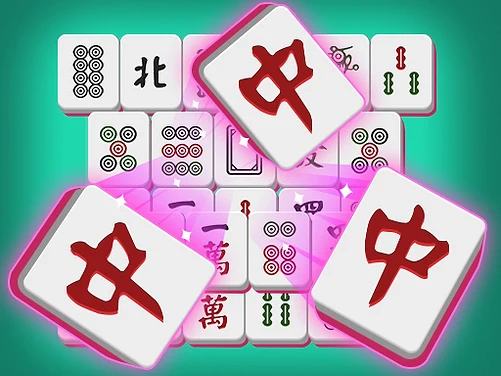
Mahjong Solitaire
Mahjong Solitaire is a classic tile-matching puzzle game inspired by traditional Mahjong, focusing on logic, planning, and calm decision-making. In Mahjong Solitaire, players clear the board by matching identical tiles that are free on at least one side. With elegant tile designs and layered layouts, Mahjong Solitaire delivers a timeless casual experience suitable for both beginners and experienced puzzle fans.
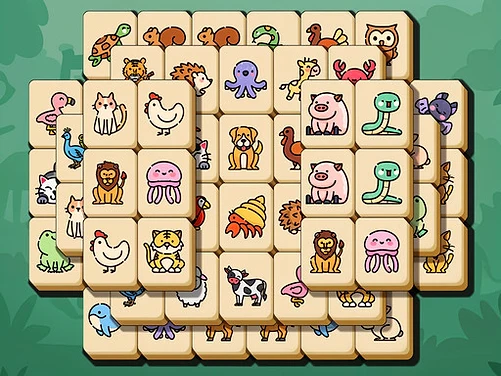
Mahjong Stack
Mahjong Stack is a fast-paced Mahjong puzzle game where tiles fall from above and stack into tall towers. Unlike classic Mahjong, Mahjong Stack challenges players to react quickly while managing growing tile columns. The game blends matching logic with dynamic stacking mechanics, creating a unique and engaging Mahjong experience.
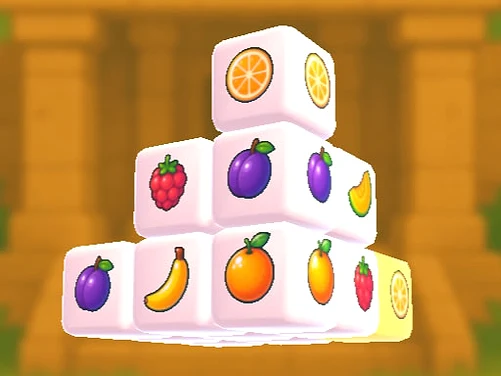
Mahjong 3D Match
Mahjong 3D Match transforms classic Mahjong into a vibrant three-dimensional puzzle experience. Players explore towers, pyramids, and creative 3D structures while matching identical tiles. Mahjong 3D Match combines spatial awareness with traditional Mahjong logic for a fresh puzzle challenge.
Frequently Asked Questions
How fast should I expect to complete a Mahjong Solitaire game?
Completion times vary dramatically by skill level and layout difficulty. Beginners: 18-25 minutes on medium layouts. Intermediate players: 12-18 minutes. Advanced players: 10-14 minutes. Experts: 8-12 minutes. Competitive specialists: 6-10 minutes on their practiced layout. Don't worry if you're slower—speed develops naturally with practice over 50-200 games.
Does playing faster reduce my win rate?
Not if you build speed correctly! Rushed play (clicking without thinking) absolutely hurts win rate—dropping from 70% to 40-50%. However, efficient play (automatic pattern recognition + smart decision-making) actually improves win rate while reducing time. The key is building speed through skill development, not by cutting corners on strategy. Follow the progression timeline in this guide for speed that doesn't sacrifice accuracy.
What's the single best way to improve speed?
Play the same layout 30-50 times. This single practice method improves speed more than any other technique. Familiarity with a specific layout creates automatic pattern recognition—your brain "knows" where to look for matches without conscious thought. After mastering one layout, these skills transfer to other layouts. Speed isn't about clicking faster; it's about eliminating thinking time through practice-based automation.
Should I use hints when trying to play fast?
Rarely. Each hint click takes 3-5 seconds (clicking + processing suggestion). In that same time, you could scan the board yourself. Hints create dependency and prevent development of fast pattern recognition skills. Exception: use hints when genuinely stuck for 15+ seconds—but if this happens frequently, your pattern recognition needs work, not more hints. The fastest players almost never use hints because their scanning is faster than the hint button.
How do competitive players get such fast times?
Three factors: (1) Specialization—they play one layout 500-1000+ times, creating unconscious mastery. (2) Optimization—keyboard shortcuts, optimal mouse positioning, pre-planning moves, zero wasted motion. (3) Mental state—they achieve "flow state" where decision-making becomes automatic. Additionally, competitive times often represent their absolute best performance (top 1% of their attempts), not average play. A competitive 7-minute time might come after 50 attempts averaging 10-12 minutes.
Is there a speed limit to how fast you can play?
Yes—physical and cognitive limits exist. Even with perfect pattern recognition, you're limited by mouse movement speed, clicking speed, and visual processing. For standard 144-tile layouts, the practical speed limit is approximately 5-7 minutes for the absolute best players in the world. Below that, you're either: (1) sacrificing strategy and getting lucky, or (2) playing a much simpler layout. Most expert players plateau at 8-12 minutes, which represents excellent speed while maintaining 75-85% win rates.
⚡ Boost Your Speed Further
Combine speed techniques with these essential guides:
🚀 Start Your Speed Journey Today!
You now have a complete roadmap to faster Mahjong Solitaire completion! Remember: speed isn't about frantic clicking—it's about efficient decision-making, automatic pattern recognition, and eliminating wasted time. Start with these priorities:
Your First Week Speed Plan:
- • Days 1-2: Play one layout 10 times—establish baseline time and familiarity
- • Days 3-4: Practice peripheral vision scanning—soft focus, whole-board awareness
- • Days 5-6: Implement zone-based clearing—systematic section-by-section approach
- • Day 7: Time yourself again—you should be 15-25% faster already!
Track your progress: record your completion time every 10-20 games. Seeing measurable improvement (15 min → 13 min → 11 min → 9 min) is incredibly motivating and proves these techniques work!
Most importantly: Speed should enhance enjoyment, not create stress. If chasing speed becomes frustrating, slow down and focus on having fun. The fastest players are those who love the game and play it constantly—speed is their reward, not their obsession.